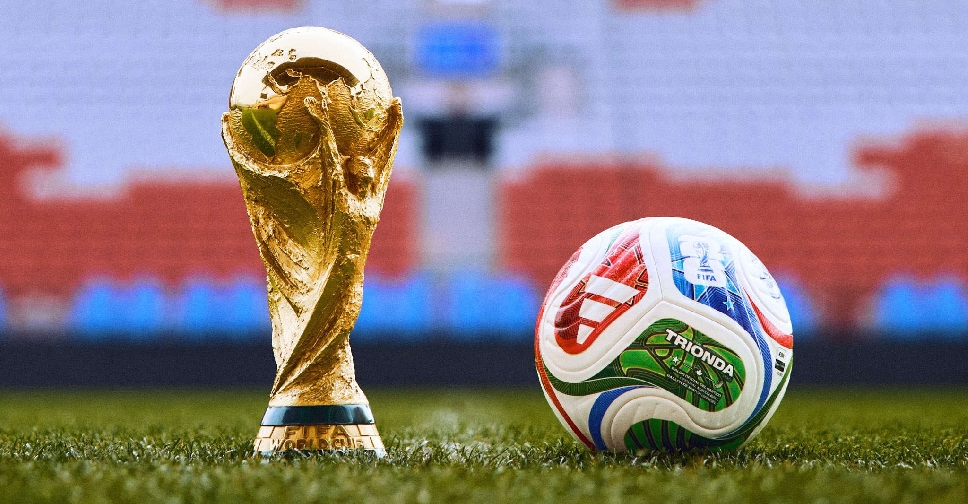
World Cup 2026 Official Ball: Adidas Trionda Design, Tech & Price
The official ball of the 2026 FIFA World Cup is the Adidas Trionda — a four-panel football engineered with connected ball technology and a tri-national design celebrating Canada, Mexico, and the United States. Unveiled on October 2, 2025, the Trionda will be used in all 104 matches across 16 host cities when the tournament kicks off on June 11, 2026.
This guide covers everything you need to know about the Trionda — its design, technology, price, controversies, and how it stacks up against legendary World Cup balls of the past.
What is the Adidas Trionda?
The Adidas Trionda is the 23rd official match ball in FIFA World Cup history and the 14th consecutive World Cup ball produced by Adidas, which has held the partnership since 1970. The ball was officially launched on October 2, 2025, at a New York reveal event preceded by a promotional Sphere takeover in Las Vegas.
The name Trionda combines the Latin prefix "tri-" with the Spanish word onda, meaning wave or vibe — a nod to the first-ever World Cup co-hosted by three nations. The waves represented in the name are visually replicated through the ball's flowing four-panel construction.
Design & Symbolism
The Trionda's design is the first World Cup ball built explicitly around the visual identities of three host nations rather than one. It carries a predominantly white base layered with red, green, and blue ribbons.
| Color | Represents | Iconography |
|---|---|---|
| Red | Canada | Maple leaf |
| Green | Mexico | Eagle |
| Blue | United States | Star |
The four curved panels meet at a triangle in the center, symbolizing the historic three-nation partnership. Gold detailing outlines the motifs and pays homage to the FIFA World Cup trophy. Embossed country icons add subtle texture you can only spot up close, doubling as a grip aid in wet or humid match conditions.
The Four-Panel Breakthrough
Traditional footballs use a 32-panel truncated icosahedron shape. The Trionda's four-panel construction is the lowest of any World Cup match ball ever made — fewer panels than even the 2014 Brazuca (six) or the 2022 Al Rihla (20). Each panel, when laid flat, resembles a three-wing boomerang. Deep, intentional seams between the panels create even drag distribution as the ball travels through the air.
Connected Ball Technology
Inside the Trionda is a side-mounted inertial measurement unit (IMU) chip embedded in one of the four panels — a structural change from the 2022 Al Rihla, which housed its sensor suspended within the bladder. The other three panels act as a counterbalance to keep the ball's flight true.
The chip transmits data 500 times per second to local positioning system (LPS) anchor points installed around each stadium. That data feeds into the VAR system in near real time and, combined with player tracking and AI processing, accelerates decisions on:
- Tight offside calls (especially on goal-bound chances)
- Handball detection
- Goal-line technology confirmation
- Pass and shot speed analytics shown on broadcasts
According to Adidas Football Innovation Lead Hannes Schaefke, every interaction the player has with the ball — every touch, every kick, every header — is being tracked and timestamped to the millisecond.
How Much Does the Trionda Cost?
The official tier and pricing structure released by Adidas:
| Version | Price (USD) | Best for |
|---|---|---|
| Trionda Pro (Official Match Ball) | $170 | Match-grade play, collectors |
| Trionda League | $80–$100 | Training, club-level play |
| Trionda Training | $45–$65 | Recreational play |
| Mini Trionda | $20–$30 | Display, kids |
The Pro version is the exact ball used in World Cup matches and meets the FIFA Quality Pro standard — the highest FIFA rating, certifying tested performance on weight, water uptake, shape, and size retention.
Is the Trionda the Next Jabulani?
Within hours of the reveal, players and pundits drew comparisons between the Trionda and the infamous Jabulani — the 2010 South Africa World Cup ball that goalkeepers and strikers alike called unpredictable, with sudden mid-flight slowdowns and erratic wobble.
The structural similarity is real: both balls use a tetrahedron-based design aiming for a near-perfect sphere, with very few panels. The Jabulani, however, suffered from two specific flaws: it was too spherical (raising its critical speed and causing sudden in-flight deceleration), and its asymmetric panel design caused unpredictable drag.
Adidas has tried to engineer past those issues in the Trionda by adding:
- Debossed macro and micro patterns on the surface to control airflow
- Embossed country icons for grip in wet conditions
- Strategically deep seams for stability and predictable drag
- A counterbalanced chip placement instead of the suspended Al Rihla design
Whether those changes are enough to avoid Jabulani-style chaos will be answered the moment the first free kick is struck on June 11.
Adidas World Cup Ball History
| Year | Tournament | Ball Name | Notable Feature |
|---|---|---|---|
| 2026 | USA / Canada / Mexico | Trionda | 4 panels, side-mounted chip |
| 2022 | Qatar | Al Rihla | First connected World Cup ball |
| 2018 | Russia | Telstar 18 | NFC chip, retro Telstar tribute |
| 2014 | Brazil | Brazuca | 6 panels, fan-named |
| 2010 | South Africa | Jabulani | 8 panels, controversial flight |
| 2006 | Germany | Teamgeist | 14 panels, thermal bonding debut |
| 2002 | South Korea / Japan | Fevernova | First non-classic Adidas design |
| 1970 | Mexico | Telstar | First Adidas World Cup ball |
Frequently Asked Questions
What is the official ball of the 2026 World Cup?
The official ball of the 2026 FIFA World Cup is the Adidas Trionda. Manufactured by Adidas, it was unveiled on October 2, 2025. The name Trionda combines "tri" (three) with the Spanish word onda (wave), honoring the three host nations: Canada, Mexico, and the United States.
Why is the World Cup 2026 ball called Trionda?
The name Trionda translates loosely to "three waves" in Spanish, paying tribute to the three host countries of the 2026 World Cup. It is the first World Cup co-hosted by three nations, and the ball's name and tri-color design reflect that historic partnership.
How much does the Adidas Trionda cost?
The Adidas Trionda Pro Official Match Ball is priced at $170 USD on Adidas.com and authorized retailers. Replica versions are available at lower prices, typically $30 to $100 depending on size and quality tier.
How many panels does the Trionda ball have?
The Adidas Trionda is built from just four thermally bonded panels — the smallest number of any FIFA World Cup match ball in history. The four-panel design is intended to create a smoother, more predictable flight path compared with traditional 32-panel balls.
Does the World Cup 2026 ball have a chip inside?
Yes. The Trionda features connected ball technology with a side-mounted inertial measurement unit (IMU) chip embedded in one of the four panels. The sensor sends data 500 times per second to anchor points around the stadium, helping VAR officials make faster offside and handball decisions.
Is the Trionda similar to the Jabulani?
The Trionda has drawn comparisons to the controversial 2010 Jabulani because both use a tetrahedron-based, near-spherical shape with few panels. Adidas has added textured surfaces, deep seams, and embossed icons to improve flight stability and grip — addressing the wobble and unpredictability that plagued the Jabulani.
When was the World Cup 2026 ball released?
The Adidas Trionda was officially unveiled on October 2, 2025, in New York, with a promotional takeover at the Sphere in Las Vegas. It went on sale the same day through Adidas retail stores, the Adidas website, and authorized partners worldwide.
Who designed the 2026 World Cup ball?
The Trionda was designed by Adidas, which has been the official match ball supplier for every FIFA World Cup since 1970. The design was led by Solene Stoermann, Category Director at Adidas, and Sam Handy, General Manager at Adidas Soccer.
Last updated May 3, 2026. We'll refresh this page as the World Cup unfolds — including in-tournament performance reviews and player feedback on the Trionda.