
Europa League Highlights: Aubameyang’s Record, the 2026/27 Draw and How to Watch
Pierre-Emerick Aubameyang is the Europa League’s all-time top scorer, Juventus and AC Milan are both in this season’s draw, and here’s where to catch every highlight.

The Europa League uses the same 36-team Swiss model as the Champions League. Here is how the league phase and knockouts work.
The Europa League uses the exact same 36-team "Swiss model" format as the Champions League, just one level down in prestige and prize money. Aston Villa are the reigning champions, having beaten Freiburg 3-0 in the 2025/26 final in Istanbul for their first European trophy since 1981. Here's how the competition actually works, and how it's changed since the group-stage days.
All 36 clubs sit in a single league table rather than being split into groups. Before the season, each club is placed into one of four seeding pots of nine, based on its UEFA club coefficient, and every team plays eight league-phase matches: two against opponents drawn from each of the other three pots, one at home and one away against each. It's the identical structure UEFA uses for the Champions League and Conference League, rolled out across all three men's club competitions in the same 2024/25 overhaul.
| Table position | What happens |
|---|---|
| 1st to 8th | Straight through to the Round of 16 |
| 9th to 24th | Two-legged knockout play-off for the remaining 8 last-16 spots (9th to 16th are seeded) |
| 25th to 36th | Eliminated from Europe entirely for the season |
That last row is a real change from the pre-2024 group-stage era, when a poor finish in the Europa League used to come with a parachute into the Conference League knockout rounds. Under the current rules, there's no safety net between any of the three competitions. Finish outside the top 24 and your European season ends there.
Ranking in the league phase works the same way it does in the Champions League: 3 points for a win, 1 for a draw, 0 for a loss, with a set order of tiebreakers when clubs finish level. UEFA works through goal difference first, then goals scored, then away goals scored, then wins, then away wins, then the collective record of a club's own league-phase opponents, then disciplinary points from yellow and red cards, and finally the club coefficient itself as a last resort. It's a long list, but it rarely needs to go past the first one or two criteria in practice.
The most recent league phase ran from September 24, 2025 to January 29, 2026, across eight matchdays, the same window used for the Champions League. From there, the format switches to a conventional two-legged knockout all the way through the quarter-finals and semi-finals, with the final itself played as a single match at a pre-selected neutral venue, exactly as it always has been.
Aston Villa beat Freiburg 3-0 in the final at Istanbul's Şükrü Saracoğlu Stadium on May 20, 2026. It was Villa's first European trophy since they won the old European Cup, the forerunner to the Champions League, back in 1981/82, a gap of 44 years. It's also a reminder of how quickly a club's fortunes can turn in the modern game: Villa were playing in England's second tier as recently as 2019 before a promotion and a sustained rebuild under first Dean Smith and then Unai Emery turned them into genuine European contenders inside a few seasons.
The 2024/25 final told a similar underdog story. Tottenham beat Manchester United 1-0 in Bilbao on May 21, 2025, a result notable for two reasons: it was Spurs' first major trophy in 17 years, and it came in a season where the club had finished a disappointing 17th in the Premier League, meaning the Europa League title alone was what secured them a route back into the Champions League the following season. For Manchester United, the loss capped one of the worst Premier League campaigns in the club's history, making the final defeat sting even more.
The Europa League wasn't always called that. It ran for decades as the UEFA Cup, launched in 1971 as a competition for clubs that finished just below the qualifying spots for the European Cup and Cup Winners' Cup. When the Cup Winners' Cup was scrapped in 1999, its remaining slots were folded into the UEFA Cup, and in 2009 UEFA rebranded the whole thing as the Europa League, introducing a group stage for the first time to give it more of the structure and prestige of the Champions League. The 2024/25 overhaul that replaced those groups with the single 36-team table was simply the next step in that same direction, more matches, a bigger table, and a format explicitly designed to look and feel like a smaller sibling of the Champions League rather than a separate, lesser event.
No club has dominated the competition, under any of its names, quite like Sevilla, who have won it a record seven times (2006, 2007, 2014, 2015, 2016, 2020 and 2023), more than double the next best total, and they've never once lost a final, going seven for seven. That run turned a mid-table Spanish side into one of the most feared knockout opponents in European football for over a decade, and it's the single most-cited example of how seriously a club can take a competition that's often dismissed as the Champions League's less glamorous sibling.
All three of UEFA's men's club competitions now run on an identical skeleton: 36 teams, four pots of nine, eight league-phase games, top eight through automatically, a playoff round for 9th to 24th, and the bottom 12 eliminated. The Conference League differs slightly, using six pots of six instead of four pots of nine, but the core principle, and the number of clubs, is the same. What separates the three competitions is mainly who qualifies for each: the Champions League gets each country's best-performing clubs from the previous domestic season, the Europa League gets the next tier down plus teams dropping from Champions League qualifying, and the Conference League gets the tier below that. A club's European fate for the season is effectively decided in the summer, based on where it qualified into, well before a ball is kicked in the actual league phase.
UEFA distributed roughly €565 million across the whole 2025/26 Europa League, which sounds substantial until it's set against the Champions League's total pot, which runs several times higher. The base prize for winning the Europa League final is €13 million, compared to €25 million for winning the Champions League, and once market pool payments and performance bonuses through the whole campaign are added in, a Champions League winner can end up earning something like 5 to 10 times what a Europa League winner takes home. That gap is exactly why qualifying for the Champions League, rather than the Europa League, remains the financial priority for almost every club in Europe capable of competing in either.
See how the format works one level up in our Champions League new format explained guide, and read about club football's other major reboot in our FIFA Club World Cup explained guide. Catch this season's Premier League race in our Premier League 2026/27 preview.
For UEFA's own coverage of the competition, see the official UEFA Europa League site.
36, playing in a single league table rather than groups, the same "Swiss model" format used by the Champions League and Conference League since 2024/25.
Aston Villa, beating Freiburg 3-0 in the final in Istanbul on May 20, 2026, their first European trophy since 1981.
No. All 36 clubs sit in one league table and each plays eight opponents, drawn two from each of four seeding pots.
They're eliminated from Europe for the season entirely. Unlike the old format, there's no longer a parachute into the Conference League.
No. It ran as the UEFA Cup from 1971 until 2009, when UEFA rebranded it and added a group stage. It absorbed the separate Cup Winners' Cup competition in 1999.
They use an identical 36-team, eight-match format, but qualify different clubs: the Champions League takes each country's strongest teams, and the Europa League takes the tier below, plus clubs eliminated from Champions League qualifying.
Tottenham, beating Manchester United 1-0 in Bilbao in May 2025, their first major trophy in 17 years.
Sevilla, with a record seven titles between 2006 and 2023. They've never lost a Europa League or UEFA Cup final, winning all seven they've reached.
€13 million from UEFA just for winning the final, with additional market pool and performance payments on top. It's roughly half the base prize for winning the Champions League.
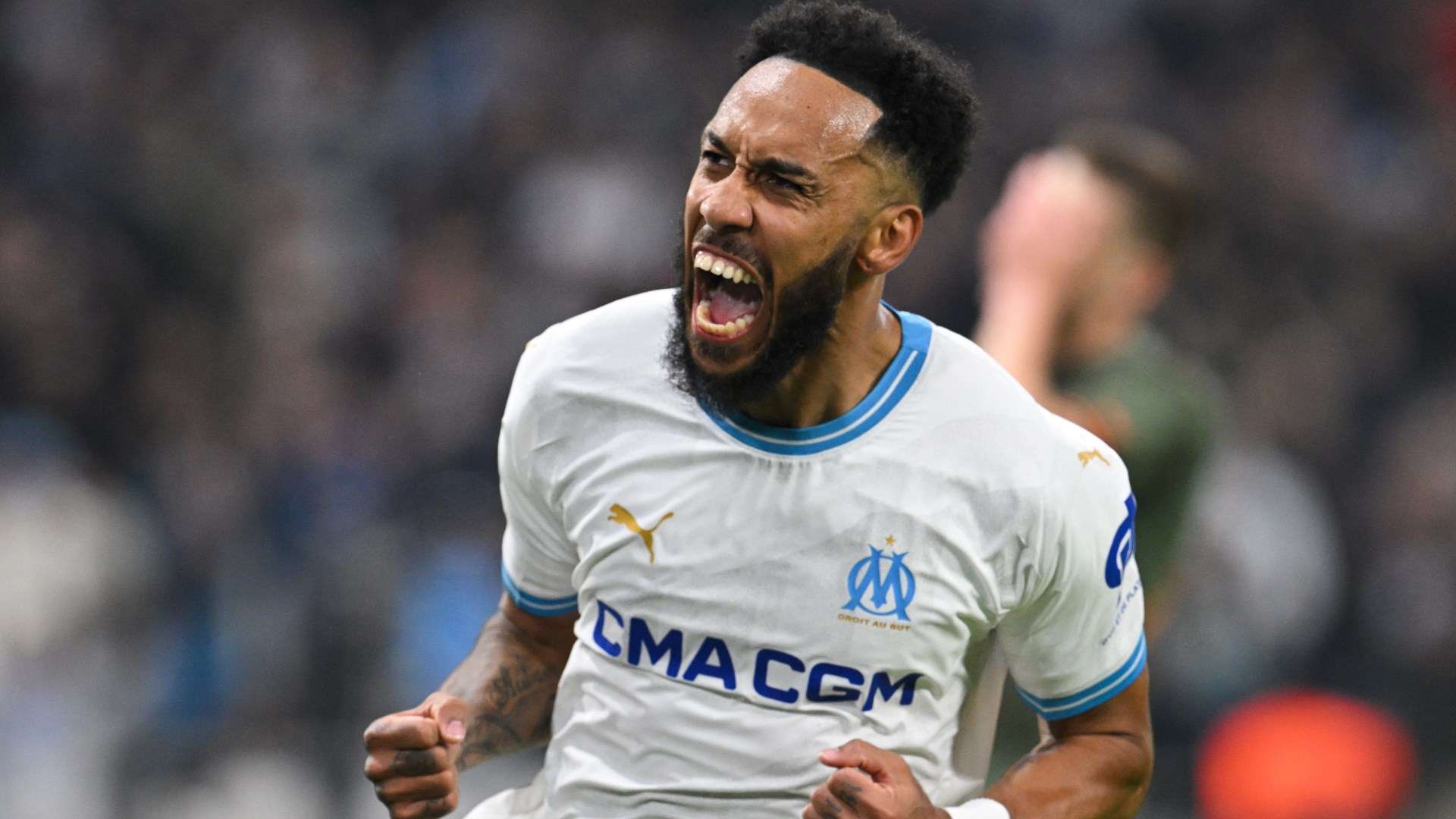
Pierre-Emerick Aubameyang is the Europa League’s all-time top scorer, Juventus and AC Milan are both in this season’s draw, and here’s where to catch every highlight.

Every fixture from the 2026/27 Europa League league phase draw in Monaco: all four pots, all 36 clubs, and the biggest matchups to watch.
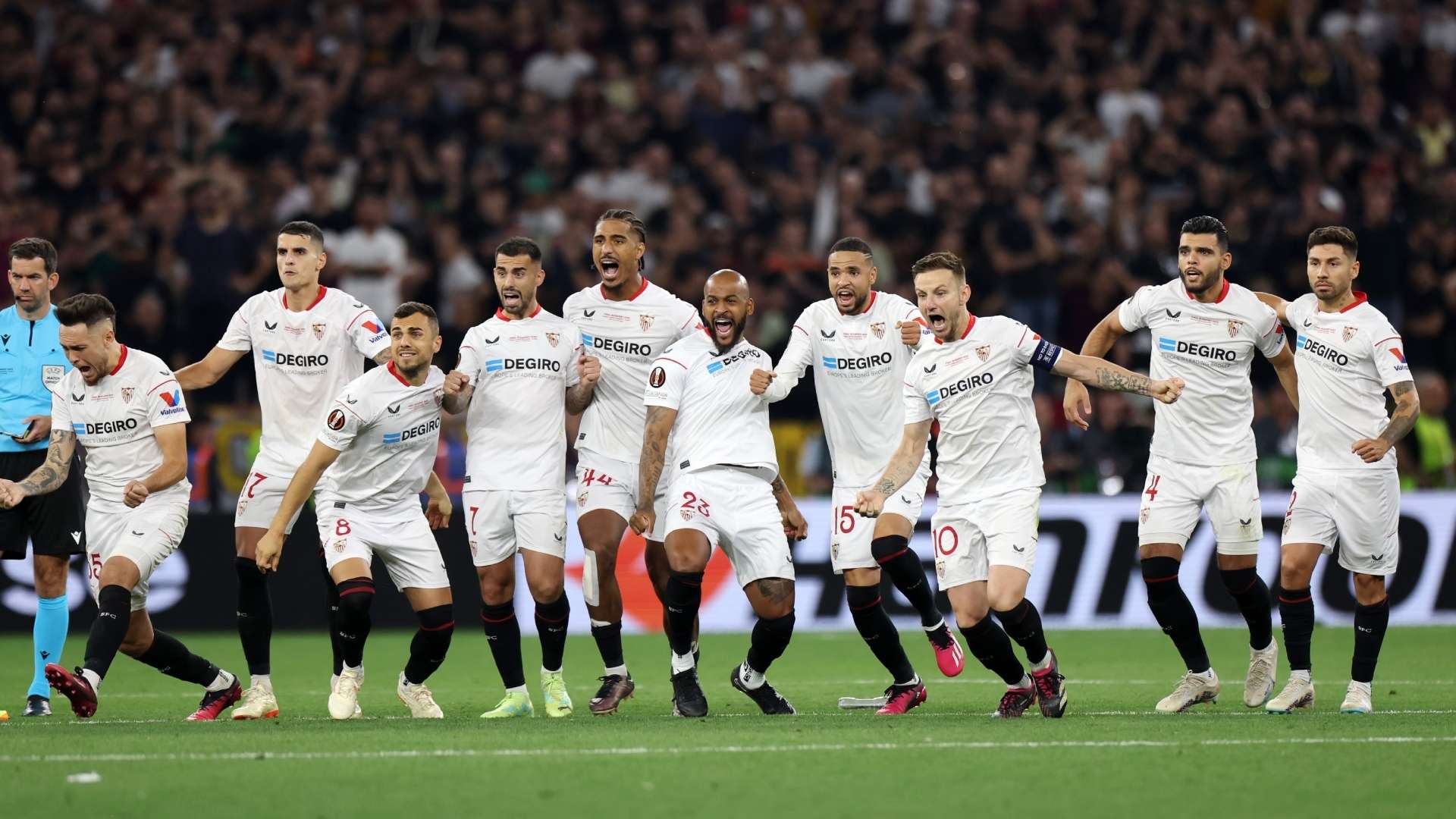
Sevilla have won the Europa League a record seven times without ever losing a final. Here's the complete list of champions since 1971/72.

Pierre-Emerick Aubameyang leads the Europa League's all-time scoring chart with 34 goals. Here's the full top five and who could still climb it.
Get the latest blog posts delivered to your inbox