
The Ballon d'Or Explained: History and Winners
Ousmane Dembele won the 2025 Ballon d'Or, ending years of Messi and Ronaldo dominance. Here is how the award actually works.

New to soccer after the 2026 World Cup? A plain-English guide to the rules of the game, from kickoff and offside to VAR and what "soccer" even means.
Soccer's popularity in the US hit record highs around the 2026 World Cup — the share of Americans who actively follow the sport climbed from 8% in 2022 to 12% by 2026, and among 18-34-year-olds it nearly doubled, from 13% to 22% over the same period. Roughly a quarter of survey respondents said the tournament was the first time they'd ever watched soccer at all. If you're one of the new fans (or you're used to "football" meaning something else entirely) and you're wondering how the game actually works, here's a plain-English guide to the basics — no prior knowledge required.
Soccer — known as football almost everywhere outside the United States, Canada, and a handful of other countries — is a game where two teams of 11 players try to score more goals than the opposition by getting a ball into the opponent's net, mostly using their feet, head, and chest rather than their hands. Whichever team scores more goals over 90 minutes wins.
A match is played on a rectangular grass (or turf) pitch, typically around 105 metres long and 68 metres wide for professional games, though the exact size can vary within IFAB's permitted range. Each team fields 11 players: one goalkeeper, who wears a different colour kit and is the only player allowed to use their hands, plus ten outfield players split roughly into defenders (closest to their own goal), midfielders (who link defence and attack), and forwards or strikers (whose main job is scoring). Coaches arrange these ten outfield players into a "formation" — you'll hear commentators mention shapes like 4-3-3 or 4-4-2, which describe the number of defenders, midfielders, and forwards a team is using. Each team is also allowed a limited number of substitutions during a match (five in most top competitions), and can name several more substitutes on the bench who don't play.
A match lasts 90 minutes, split into two 45-minute halves with a break at half-time (usually 15 minutes). Unlike sports such as American football or basketball, the clock never stops for throw-ins, fouls, or substitutions — instead, the referee keeps a running mental tally of time lost to those stoppages and adds it to the end of each half as stoppage time (also called "added time" or, informally, "injury time"). That's why you'll often see a match run to the 93rd or 97th minute instead of stopping dead at 90.
Outfield players can use any part of their body except their hands and arms to control the ball, pass it, or score. Only the goalkeeper may use their hands, and only inside their own penalty area — if a goalkeeper picks the ball up outside that box, it's treated as a handball foul just like it would be for any other player. Goalkeepers also can't pick up a deliberate pass back to them from a teammate's foot (the "back-pass rule"); if they do, the referee awards an indirect free kick to the opposing team from the spot of the handling.
Handball is judged mainly on whether the contact looked deliberate, not just whether the ball touched a hand or arm. Under IFAB's current Laws of the Game, a player's arm position matters: making yourself "unnaturally bigger" or leaving your hand or arm away from your body in a way that blocks the ball is usually a foul, even if it wasn't intentional. One nuance clarified for the 2025/26 season: if the ball accidentally strikes a player's hand or arm and then falls to a teammate who scores or creates a clear chance, it's no longer automatically penalised — but a player who accidentally scores directly off their own hand or arm still has the goal ruled out.
Most fouls result in a free kick for the other team — "direct" for physical fouls like tripping or pushing (the kicker can shoot straight at goal), or "indirect" for technical offences like offside or dangerous play (the ball must touch a second player before a goal counts). If a defender fouls an opponent inside their own penalty area, it's a penalty kick instead, taken from 12 yards with only the goalkeeper to beat. Referees also apply an advantage rule: if stopping play for a foul would actually help the team that was fouled, the referee lets play continue and waves both hands to signal "advantage."
A yellow card is a formal caution for a reckless foul, dissent, or unsporting behaviour; two yellow cards in one match automatically mean a red. A red card — shown directly for a serious foul or violent conduct, or shown after two yellows — means immediate ejection with no substitute allowed, so that team plays the rest of the match with one fewer player.
A player is offside if any part of their head, body, or feet (not their hands or arms) is nearer to the opponent's goal line than both the ball and the second-last defender — usually the last outfield defender, since the goalkeeper is normally last — at the exact moment a teammate plays the ball to them. The rule exists to stop attackers simply camping next to the goal waiting for a pass. It only applies in the opponent's half, and only at the moment the ball is played, not when the player actually receives it — which is why a player can burst forward from an onside position and still score even if they end up well ahead of the defence by the time the ball arrives.
Top competitions including the World Cup and Champions League now use semi-automated offside technology (SAOT), which tracks up to 29 data points per player, 50 times per second, plus the ball's exact position, to help referees make faster and more accurate offside calls without waiting minutes for a manual video review.
It depends on the competition. In regular league matches (like the Premier League or MLS regular season), a tie is a completely normal result — both teams get 1 point instead of 3 for a win, 0 for a loss. But in knockout competitions — like the World Cup or Champions League knockout rounds — a game can't end level, since there has to be a winner. If it's tied after 90 minutes, it goes to 30 minutes of extra time (two 15-minute periods), and then a penalty shootout if it's still level after that. We break the shootout rules down step by step in our World Cup extra time and penalties guide.
If you've watched older European football coverage, you may have heard of the away goals rule, which used to break ties in two-legged matches by giving the edge to whichever team scored more goals away from home. UEFA scrapped it in 2021 after deciding it unfairly rewarded defensive road trips and no longer reflected the modern game, and it was never used at the World Cup in the first place. So if a two-legged Champions League tie is level on aggregate today, it simply goes to extra time and then penalties, just like a single World Cup knockout match.
VAR (Video Assistant Referee) is a team of off-field officials who review major decisions — goals, penalties, straight red cards, and cases of mistaken identity — using multiple camera angles, and can recommend the on-field referee review a decision themselves on a pitch-side monitor. Under the current "referee's call" standard, VAR only steps in for a clear and obvious error, not to relitigate every marginal decision, so the on-field referee's judgment stands unless the video evidence is decisive. It's typically paired with semi-automated offside technology for the fastest, most accurate offside calls.
Despite the stereotype, "soccer" isn't an American invention — both names originated in England. "Football" describes any sport played primarily with the feet, while "soccer" is a shortened form of "association football," the sport's formal name under the Football Association, coined by British university students in the 1880s who were fond of "-er" abbreviations (the same slang habit that gave us "rugger" for rugby football). The word was common in British English well into the 20th century. The US leaned on "soccer" mainly to avoid confusion with American football and college football, which had already claimed the word "football" domestically — and Canada, Australia, Ireland and South Africa use "soccer" for similar reasons, since all of those countries have a different home-grown sport already called football or footy.
Ready to put it into practice? Catch full match highlights from the world's biggest leagues in our Premier League highlights and Champions League highlights hubs, learn how Europe's top club competition now works in our Champions League new format explained guide, or see who lifted the trophy at the last World Cup in our 2026 World Cup recap.
These rules are set out in the IFAB Laws of the Game, football's official rulebook, maintained jointly by FIFA and the four UK football associations.
90 minutes, played as two 45-minute halves, plus stoppage time added by the referee at the end of each half to make up for time lost during play — so most matches actually finish a few minutes past the 90-minute mark.
Both names originated in England — "soccer" comes from "association football," shortened by students in the 1880s. The US, Canada, Australia and a few other countries adopted "soccer" partly to distinguish the sport from their own home-grown football codes.
An attacking player is offside if their head, body or feet are closer to the opponent's goal than both the ball and the second-last defender at the moment a teammate passes to them. It only applies in the opponent's half.
Yes, in regular league play — both teams earn 1 point. In knockout competitions, a tied match goes to 30 minutes of extra time and then penalties if it's still level, since there must be a winner.
11 players per side on the field at once — one goalkeeper and ten outfield players — plus substitutes on the bench, with most top competitions now allowing five substitutions per match.
Video Assistant Referee — a team of officials who review major decisions like goals, penalties and red cards using video replay, stepping in only when there's a clear and obvious error by the on-field referee.
Deliberately touching the ball with your hand or arm, or making your arm unnaturally large to block it. Accidental handball that leads to a teammate scoring or a clear chance is no longer automatically penalised, but a goal scored directly off a player's own hand or arm is always disallowed.
A direct free kick can be shot straight into the goal; an indirect free kick (awarded for offences like offside) must touch a second player before a goal counts.

Ousmane Dembele won the 2025 Ballon d'Or, ending years of Messi and Ronaldo dominance. Here is how the award actually works.

Real Madrid became the first club to pass 1 billion euros in revenue. See the full top 9 richest football clubs by revenue.
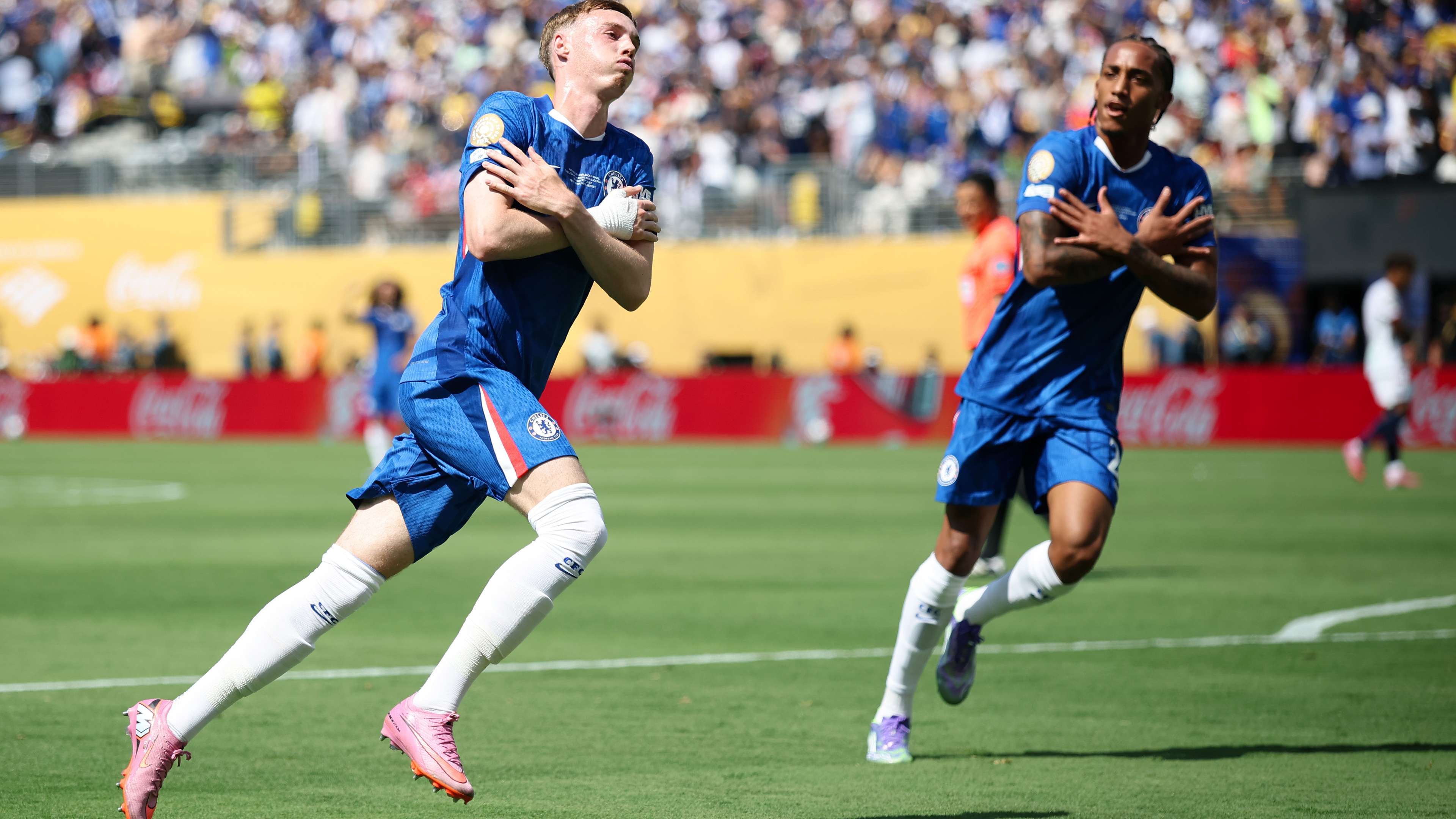
Chelsea beat PSG 3-0 to win the first 32-team FIFA Club World Cup in 2025. Here is how the new format works and when it returns.

Paying for ESPN+ or beIN just to catch the goals? Here's how to watch football highlights completely free, with no subscription required.
Get the latest blog posts delivered to your inbox